

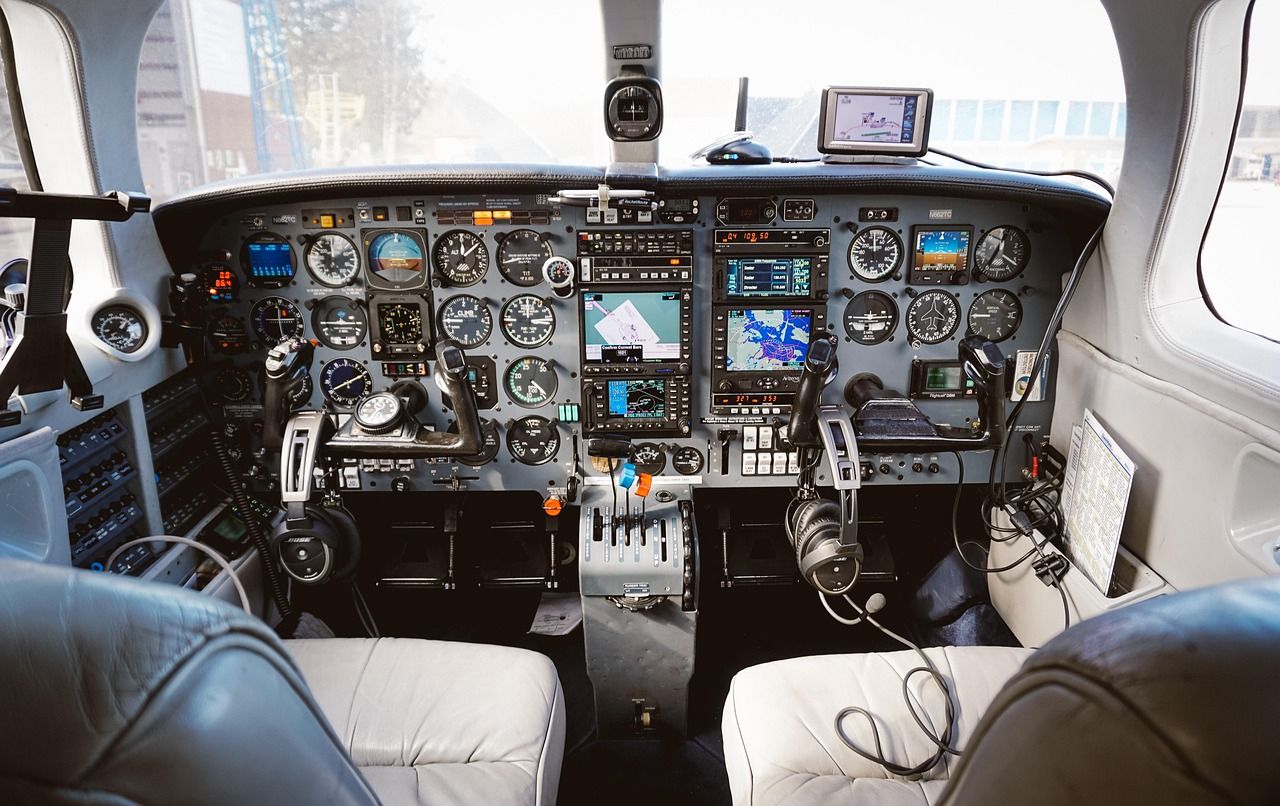
Turning the Dream of Flying into Reality
For many young Indians, looking up at a plane trailing white streaks across the blue sky isn't just a moment of wonder; it is the spark of a lifelong ambition. The profession of a pilot remains one of the most prestigious, adventurous, and financially rewarding careers in the world. However, the path to the cockpit is often perceived as a mystery shrouded in complex regulations and high costs. If you have ever wondered how to transition from a student to a captain commanding a commercial jet, this guide is designed for you.
The aviation industry in India is currently witnessing an unprecedented boom. With domestic airlines placing record-breaking orders for hundreds of new aircraft, the demand for skilled pilots has never been higher. But becoming a pilot requires more than just a passion for heights. It demands disciplined study, physical fitness, and a significant financial investment. In this comprehensive guide, we will break down the eligibility criteria, the various training routes, the costs involved, and the steps you need to take to earn your wings in India.
Basic Eligibility Criteria for Aspiring Pilots
Before you enroll in a flight school, you must ensure you meet the mandatory requirements set by the Directorate General of Civil Aviation (DGCA), which is the regulatory body for civil aviation in India.
Educational Qualifications
The most critical requirement is your academic background. You must have completed your 10+2 (Higher Secondary) education from a recognized board. It is mandatory to have studied Physics and Mathematics as core subjects. You should have a minimum aggregate of 50 percent marks, though this can vary slightly depending on specific airline cadet programs. If you did not have Physics or Mathematics in school, do not lose hope. You can appear for these subjects separately through the National Institute of Open Schooling (NIOS) to become eligible.
Age and Language Requirements
To apply for a Student Pilot License (SPL), you must be at least 16 years old. To obtain a Commercial Pilot License (CPL), you must be at least 18 years old. There is no strict upper age limit for starting training, but most airlines prefer candidates who start their careers early. Additionally, you must be proficient in English, both written and spoken, as it is the international language of aviation.
Medical Fitness Standards
Aviation is a physically demanding profession. You must undergo a two-stage medical examination. The first is a Class II Medical, conducted by DGCA-authorized doctors. Once you are cleared and plan to pursue a professional career, you must undergo a Class I Medical at designated Air Force stations or specialized civil medical centers. These tests check your vision, hearing, heart health, and general physical condition. While wearing glasses is generally allowed as long as your vision is corrected to 6/6, certain conditions like color blindness can be a disqualifier.
The Step-by-Step Process to Becoming a Pilot
Once you meet the eligibility criteria, the journey involves a mix of ground studies and actual flying hours. Here is the chronological path you will follow.
Step 1: Obtain a Computer Number
The very first administrative step is to apply for a Computer Number through the Parivahan/E-GCA portal. This is a unique identification number issued by the DGCA that tracks your exams and flying records throughout your career. You cannot appear for DGCA theoretical exams without this number.
Step 2: Clear the DGCA Ground Subjects
Being a pilot involves a massive amount of theoretical knowledge. You must pass exams in several subjects, including: Air Navigation, Air Meteorology, Air Regulations, Technical General, and Technical Specific. Additionally, you must clear a Radio Telephony (RTR) exam conducted by the Wireless Planning and Coordination (WPC) wing to learn how to communicate with Air Traffic Control.
Step 3: Join a Flight Training Organization (FTO)
After clearing some or all of your exams, you must join a flight school to begin your actual flying. India has several reputed FTOs, such as the Indira Gandhi Rashtriya Uran Akademi (IGRUA) and various private academies. Here, you will start by earning a Student Pilot License (SPL), which allows you to learn flying under an instructor. You will eventually progress to a Private Pilot License (PPL) and finally a Commercial Pilot License (CPL).
Step 4: Accumulate Flying Hours
To qualify for a CPL, you must complete a minimum of 200 hours of flying time. These hours are divided into several categories, including: Solo flying, Cross-country flying, Instrument flying (flying using only the cockpit instruments), and Night flying. This phase is the most time-consuming and exhilarating part of the training.
Step 5: Type Rating
Earning your CPL allows you to fly a light aircraft, but it does not qualify you to fly a massive Boeing 737 or an Airbus A320. Once you are hired by an airline, or sometimes before that at your own cost, you must undergo Type Rating. This is specialized training for a specific type of commercial aircraft and usually takes 45 to 60 days in high-end simulators.
Comparing Conventional Training vs. Cadet Pilot Programs
In India, there are two primary ways to reach the cockpit of a major airline.
1. Conventional Training Path
In this route, you choose your own flight school, clear your exams at your own pace, and finish your 200 hours. After getting your CPL, you apply for airline vacancies as they arise. This path offers more flexibility and is generally cheaper, costing between 40 to 50 Lakhs INR. However, there is no guarantee of a job immediately after completion.
2. Cadet Pilot Programs
Airlines like IndiGo, Air India, and SpiceJet run their own Cadet Programs. They select candidates through a rigorous entrance process and oversee their entire training from start to finish. The primary advantage is a Letter of Intent (LOI) or a job guarantee upon successful completion. However, these programs are significantly more expensive, often costing between 80 Lakhs to 1.2 Crore INR.
Cost of Becoming a Pilot in India
The financial aspect is the biggest hurdle for many. The cost of flight training in India covers several areas. Ground classes usually cost between 1.5 to 3 Lakhs. Flying training for 200 hours costs roughly 35 to 45 Lakhs. Type rating is an additional 15 to 25 Lakhs. When you add up medical exams, license fees, and travel, the total cost for the conventional route typically lands between 50 to 70 Lakhs INR. While expensive, many Indian banks offer specialized education loans for pilot training, recognizing it as a high-earning profession.
Top Flight Schools in India
Choosing the right flight school is vital for quality training and safety. Some of the most recognized institutions in India include:
- Indira Gandhi Rashtriya Uran Akademi (IGRUA), Rae Bareli
- National Flying Training Institute (NFTI), Gondia
- Madhya Pradesh Flying Club (MPFC)
- Bombay Flying Club, Mumbai
- Government Flying Training School (GFTS), Bengaluru
When selecting a school, always check the number of operational aircraft they have, the availability of flight instructors, and their track record for safety and maintenance.
The Career Outlook and Salary
The aviation sector in India is expanding into Tier 2 and Tier 3 cities, meaning more routes and more jobs. A fresh Commercial Pilot License holder starts as a Junior First Officer. After gaining experience and undergoing type rating, they become a First Officer. With roughly 1,500 to 2,000 flying hours and passing further exams, one can be promoted to Captain.
The salary for a Junior First Officer in India typically ranges from 1.5 to 2.5 Lakhs INR per month. A Senior First Officer can earn between 3.5 to 5 Lakhs, while an experienced Captain can earn anywhere from 8 to 12 Lakhs INR per month, depending on the airline and the type of aircraft they fly.
Conclusion
Becoming a pilot in India is a marathon, not a sprint. It requires academic dedication to master the physics of flight, physical discipline to pass medical checks, and financial planning to manage the training costs. However, for those who truly love the skies, the reward is a workspace with the best view in the world and a career that is as exciting as it is prestigious. If you have the passion and the persistence, start by clearing your Class II medicals and your ground subjects. The horizon is waiting for you.
How much does it cost to become a pilot in India?
The total cost of becoming a commercial pilot in India typically ranges from 50 Lakhs to 1.2 Crore INR. This includes ground classes, 200 hours of flight training, and the type rating required for commercial jets.
Can I become a pilot if I am from a commerce or arts background?
Yes, you can. While the DGCA requires Physics and Maths at the 10+2 level, students from other streams can clear these two subjects through the National Institute of Open Schooling (NIOS) to become eligible for pilot training.
Is 12th marks important for becoming a pilot?
Yes, most airlines and cadet programs require at least 50 to 51 percent marks in 10+2. While the DGCA only requires a pass certificate, having higher marks helps you qualify for airline-specific entrance exams.
What is the minimum height required to be a pilot in India?
There is no strict minimum height for commercial pilots in India, unlike the Air Force. However, you must be tall enough to reach all flight controls comfortably and have a clear view outside the cockpit window during the medical assessment.
How long does it take to get a Commercial Pilot License?
On average, it takes 18 to 24 months to complete the ground exams and the 200 hours of flying required for a CPL, though this can vary based on weather conditions and aircraft availability.


