

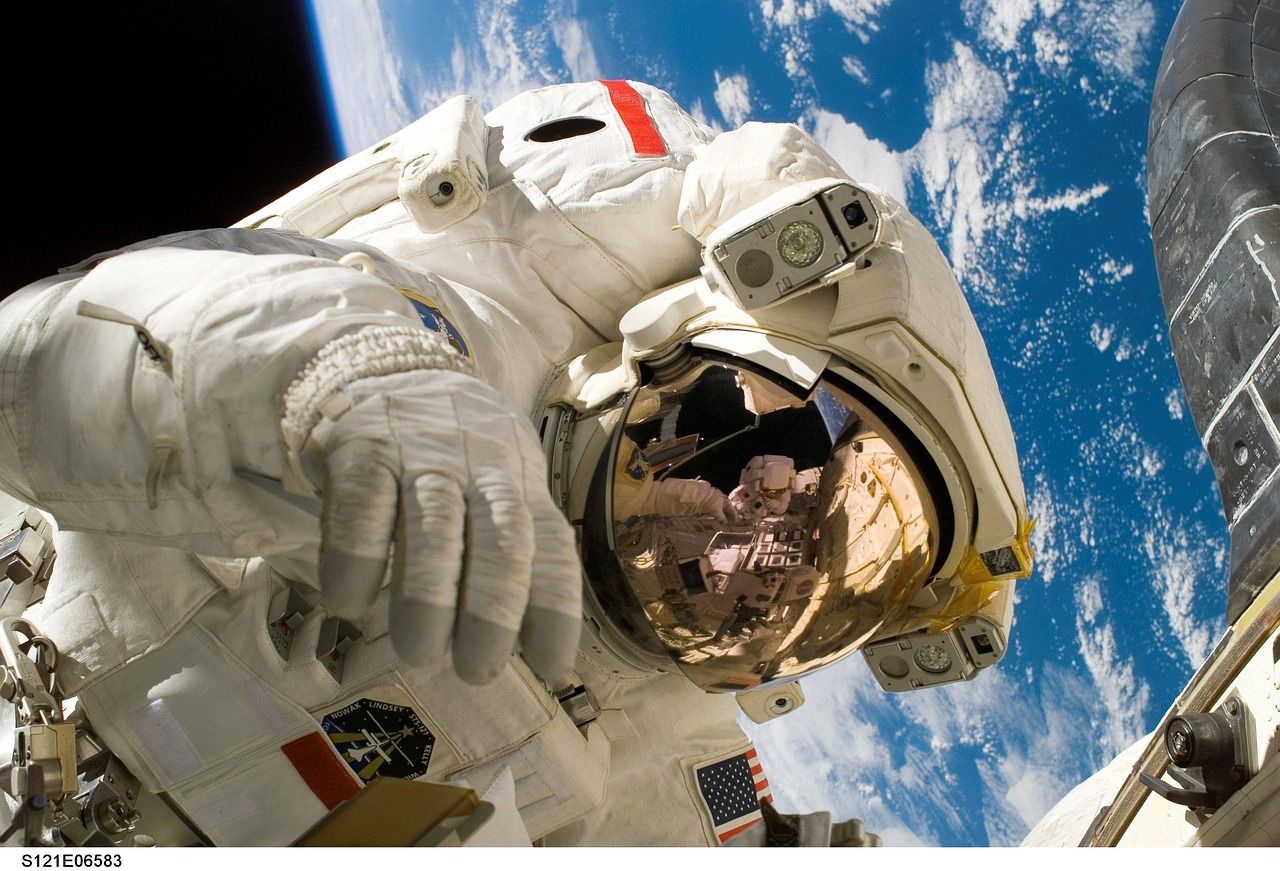
From the Moon to Mars: How NASA's Aviation Milestones Inspire India
Imagine looking up at the night sky, a canvas dotted with countless stars, and knowing that humanity has not only touched the Moon but is now dreaming of reaching Mars. This incredible journey of exploration and innovation is largely thanks to organizations like NASA, the National Aeronautics and Space Administration of the United States. For us in India, a nation with a burgeoning aerospace sector and a deep-seated fascination with the cosmos, NASA's historic aviation achievements aren't just tales of distant achievements; they are powerful inspirations that fuel our own dreams and ambitions.
You might be wondering, "What does NASA's aviation history have to do with us in India?" The answer is more profound than you think. Every breakthrough in aerospace, every daring flight, every technological leap made by NASA has laid the groundwork for global advancements. And as India continues its own ambitious space programs, from the Chandrayaan missions to the Gaganyaan human spaceflight project, understanding this legacy is crucial. It's about learning from the past, embracing the spirit of innovation, and charting our own course to the stars.
The Golden Era of Aviation: NASA's Early Triumphs
NASA, though a relatively young agency formed in 1958, builds upon a rich history of American aviation innovation. Before the space age truly began, engineers and pilots were already pushing the boundaries of flight. Think of the iconic X-planes, experimental aircraft designed to test the limits of speed, altitude, and aerodynamics. These weren't just about building faster planes; they were about understanding the fundamental principles of flight that would eventually be crucial for launching rockets and spacecraft.
For India, this era of pioneering aviation offers valuable lessons. Even during our own initial steps towards developing indigenous aircraft and aerospace capabilities, the global advancements in aviation provided blueprints and inspiration. The focus on fundamental research, the willingness to experiment with unconventional designs, and the meticulous testing processes employed by early NASA projects are principles that resonate deeply with any nation striving for technological self-reliance.
The Mercury Program: A Giant Leap for Mankind
The 1960s marked a pivotal moment with NASA's Mercury Program. This was humanity's first foray into human spaceflight. Astronauts like Alan Shepard and John Glenn ventured into orbit, demonstrating that humans could survive and function in the harsh environment of space. While these were suborbital and orbital flights, they were the crucial first steps that paved the way for everything that followed.
For young Indians fascinated by science and space, the images of these early astronauts, their capsules, and the sheer audacity of their missions were incredibly captivating. It ignited a spark, a desire to explore, and a belief that the impossible could indeed be made possible. This spirit is very much alive in India today, evident in the enthusiasm surrounding ISRO's achievements.
The Gemini and Apollo Programs: Reaching for the Moon
If Mercury was the first step, then the Gemini and Apollo programs were giant leaps. Gemini tested crucial technologies like rendezvous and docking in orbit, skills essential for a lunar mission. Then came Apollo, the program that fulfilled President Kennedy's audacious goal of landing a man on the Moon. The landing of Apollo 11 in 1969 was a watershed moment for humanity, showcasing unparalleled engineering prowess and an indomitable spirit of exploration.
The Apollo missions demonstrated the power of focused national effort, immense technological investment, and unwavering determination. For India, aiming for ambitious goals like sending humans to space with Gaganyaan, the Apollo program serves as a monumental case study in project management, technological development, and international collaboration (even though it was a national effort, it inspired global cooperation in space). It shows that with clear vision and sustained commitment, even the most challenging celestial objectives can be achieved.
Beyond the Moon: Exploring the Solar System and Beyond
NASA's influence didn't stop at the Moon. The agency has been instrumental in exploring our solar system and understanding our universe through a series of groundbreaking robotic missions and advanced observatories.
Voyager Missions: Our Cosmic Ambassadors
The Voyager probes, launched in the late 1970s, are perhaps the most remarkable examples of long-duration exploration. These spacecraft have traveled beyond the heliosphere, venturing into interstellar space. They've provided us with unprecedented close-up images of Jupiter, Saturn, Uranus, and Neptune, fundamentally changing our understanding of these gas giants and their moons.
The sheer longevity and scientific output of the Voyager missions are awe-inspiring. For India, this highlights the importance of long-term planning and investment in space science. Our own missions to Mars (Mangalyaan) and the Moon (Chandrayaan) are building on this legacy of sustained exploration, demonstrating our commitment to unraveling the mysteries of our cosmic neighborhood. The data collected by these probes also informs our understanding of planetary formation, relevant to studying our own Earth and its future.
The Hubble Space Telescope: A Window to the Universe
Launched in 1990, the Hubble Space Telescope revolutionized astronomy. Its stunning images of distant galaxies, nebulae, and stars have not only advanced scientific knowledge but have also captured the public imagination worldwide. Hubble has allowed us to peer back in time, observing the universe as it was billions of years ago.
The impact of Hubble on our understanding of cosmology is immeasurable. For India, with its own aspirations for advanced space telescopes and observational astronomy, Hubble is a testament to the power of advanced optics and data analysis. It reinforces the need for India to invest in sophisticated observational tools to contribute to humanity's collective knowledge of the cosmos. Imagine the future where Indian telescopes contribute to discoveries just as profound as those made by Hubble.
The X-Planes and Supersonic Flight: Pushing Aerodynamic Limits
While we often associate NASA with space, its roots are deeply embedded in aviation. The agency's continued work on experimental aircraft, particularly the X-plane series, has been crucial in advancing the science of flight. These aircraft are designed to test cutting-edge technologies, often at the very edge of what's aerodynamically possible.
Take the X-15, for instance, which flew at hypersonic speeds and at the edge of space in the 1960s. More recently, NASA has been developing the X-59 Quiet Supersonic Technology aircraft, aiming to make supersonic flight quieter and more accessible. This pursuit of faster, more efficient, and cleaner air travel is directly relevant to India's growing aviation sector.
For India, with its rapidly expanding airline industry and a growing need for efficient transport, advancements in supersonic and hypersonic flight are of significant interest. While commercial supersonic passenger travel is still a distant dream, the research conducted by NASA on aerodynamic efficiency, materials science, and engine technology will undoubtedly influence future aircraft designs globally, including those developed or adopted by India.
NASA's Role in Modern Aviation
NASA's contribution to aviation extends beyond experimental aircraft. The agency plays a vital role in developing new air traffic management systems, improving aircraft safety, and researching sustainable aviation fuels. These are crucial areas that directly impact the efficiency, environmental footprint, and accessibility of air travel worldwide.
Think about how many flights operate daily in and out of major Indian airports like Delhi, Mumbai, or Bengaluru. Improving air traffic control, reducing flight delays, and making aviation more environmentally friendly are direct concerns for India. NASA's research in these areas provides valuable insights and technological frameworks that can be adapted and implemented to enhance India's own aviation infrastructure and practices.
NASA's Legacy and India's Aerospace Future
NASA's journey, from its early aviation experiments to its ambitious space exploration endeavors, is a testament to human ingenuity, perseverance, and the unyielding desire to explore the unknown. For India, this legacy serves as a powerful beacon. We are at a critical juncture in our own space and aviation development. Our scientists and engineers are capable, our ambitions are high, and our potential is immense.
By studying NASA's historic flights and ongoing innovations, we can learn invaluable lessons about:
- The importance of fundamental research and development.
- The need for long-term vision and sustained investment in science and technology.
- The power of collaboration and knowledge sharing.
- The courage to dream big and push beyond perceived limits.
As India continues to develop its own capabilities in launching satellites, exploring the cosmos, and potentially sending humans into space, the spirit of innovation fostered by organizations like NASA is something we can truly embrace. The historic aviation and space flights of NASA are not just American achievements; they are part of humanity's collective heritage, inspiring us all to reach for the stars and to continue the journey of exploration.
The next time you see a rocket launch on television or hear about a new discovery from a distant planet, remember the incredible journey that brought us here. And for us in India, let it serve as a reminder of the boundless possibilities that await us in the skies and beyond, as we chart our own exciting course in the history of aviation and space exploration.
What are NASA's most historic aviation achievements?
NASA's historic aviation achievements include the development of experimental X-planes that pushed the boundaries of speed and altitude, paving the way for advancements in aerodynamics and supersonic flight. The agency's foundational work in rocketry and guidance systems, initially for military purposes, directly led to its capabilities in spaceflight.
How do NASA's space missions inspire India's aerospace goals?
NASA's space missions, like the Apollo program to the Moon and the Voyager probes exploring the solar system, serve as powerful inspirations for India's own ambitious space goals, such as Chandrayaan and Gaganyaan. They demonstrate the feasibility of complex missions, highlight the importance of technological innovation, and encourage long-term vision and investment in space science and exploration.
What lessons can India learn from NASA's experimental aircraft programs?
India can learn from NASA's experimental aircraft programs, such as the X-planes, the importance of rigorous research and development, pushing aerodynamic limits, and developing advanced materials and propulsion systems. This knowledge is crucial for advancing India's own aviation industry and developing next-generation aircraft.
How does NASA's work in aviation contribute to modern air travel?
NASA's ongoing work in aviation contributes to modern air travel by developing more efficient engine technologies, improving air traffic management systems, researching sustainable aviation fuels, and enhancing aircraft safety. These advancements help make air travel more accessible, environmentally friendly, and reliable globally, with potential applications for India's growing aviation sector.


