

The Allure of Industrial Giants
Nuclear power plants are some of the most imposing structures in the modern world. For a photographer in India, these facilities offer a unique blend of architectural symmetry, industrial grit, and a sense of futuristic power. Whether it is the iconic cooling towers of the Rajasthan Atomic Power Station or the coastal silhouette of the Kudankulam Nuclear Power Plant, these sites provide a compelling subject for those interested in industrial and landscape photography. However, learning how to photograph a nuclear facility involves much more than just pointing and clicking. It requires a deep understanding of light, composition, and, most importantly, the legal framework that governs these sensitive installations in India.
Understanding the Legal Landscape in India
Before you even pack your camera bag, you must understand that nuclear power plants in India are classified as prohibited places under the Official Secrets Act and are guarded by the Central Industrial Security Force (CISF). Photographing the interior or even the immediate perimeter of these facilities without explicit permission from the Department of Atomic Energy (DAE) is strictly forbidden and can lead to serious legal consequences. To photograph a nuclear plant legally, you generally have two options. The first is to apply for formal permission through the DAE for educational or journalistic purposes. The second, and more common for hobbyists, is to capture the facility from a significant distance from public land, such as a public beach, a distant hill, or a highway, where the structure becomes part of a larger landscape. Always ensure you are not standing on restricted ground and be prepared to show your identification to security personnel if questioned.
The Importance of Research
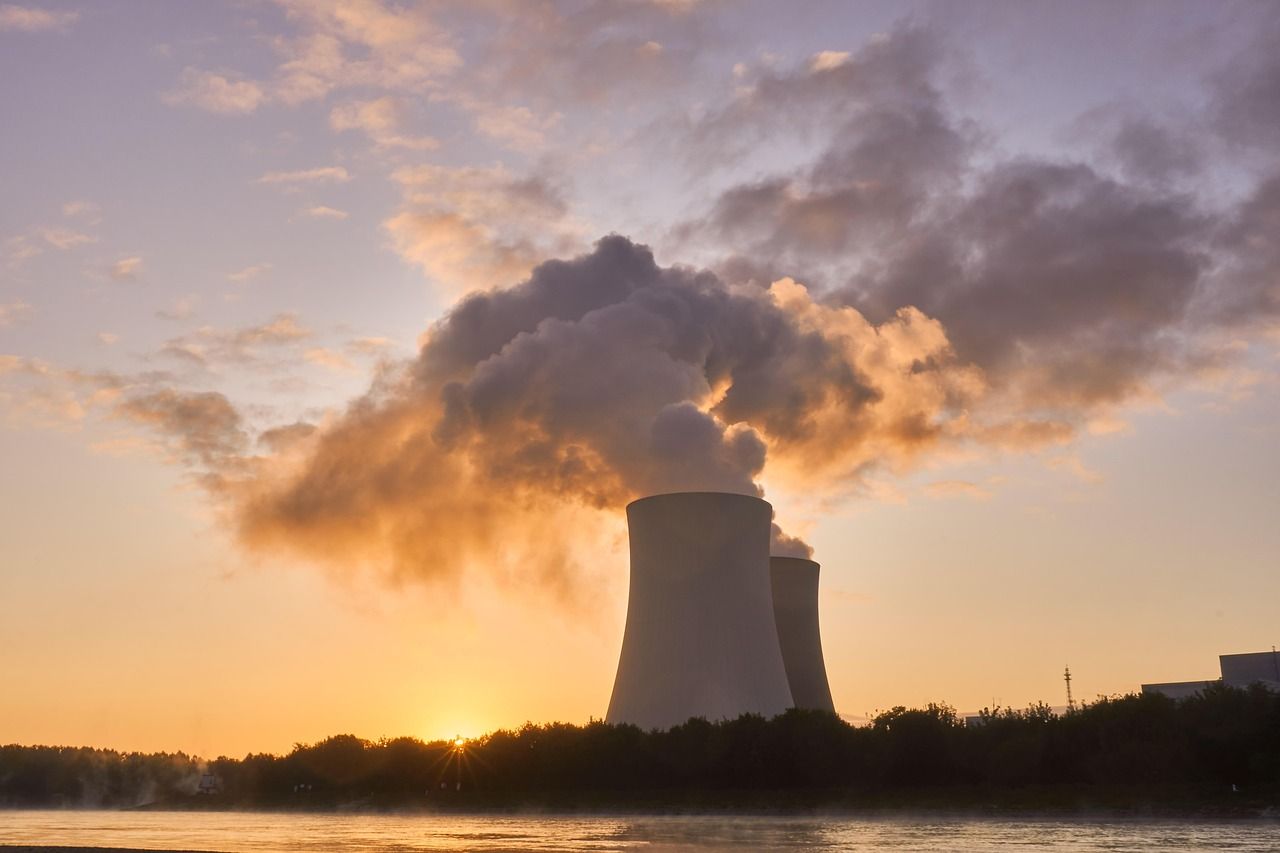
Research is the first step in industrial photography. Use satellite maps to identify public vantage points that offer a clear line of sight to the facility. Look for elevated areas or water bodies that can provide interesting reflections. For instance, many of India's nuclear plants are located near the coast or large water reservoirs for cooling purposes. Understanding the orientation of the plant in relation to the sun will also help you determine whether it is a sunrise or sunset location. In India, the golden hour provides a soft, warm glow that can humanize the cold, concrete structures of a reactor building.
Essential Gear for Industrial Photography
When you are shooting from a distance, your choice of gear becomes critical. Since you cannot get close to the subject, a versatile kit is necessary to capture both the scale and the details of the facility.
Lenses for Scale and Detail
A telephoto lens, such as a 70-200mm or even a 100-400mm, is often your most valuable tool. This allows you to compress the perspective, making the cooling towers look massive against the background. Conversely, a wide-angle lens (16-35mm) is useful if you want to include the surrounding environment, such as the local flora or the winding roads leading toward the facility, to tell a story of how the plant fits into the Indian landscape.
Stability is Key
Because the best shots often occur during the blue hour or at night when the plant is illuminated by floodlights, a sturdy tripod is non-negotiable. Long exposures are the secret to making industrial sites look ethereal. A tripod ensures that your images remain sharp even with shutter speeds spanning several seconds. In the windy coastal regions of Tamil Nadu or the dusty plains of Rajasthan, a heavy-duty tripod will prevent camera shake from ruining your shot.
Filters for Light Control
A Circular Polarizer can help manage reflections on water surfaces near the plant and enhance the blue of the sky. If you are shooting during the day and want to capture the motion of the steam rising from the cooling towers as a soft blur, a Neutral Density (ND) filter will allow for longer shutter speeds even in bright Indian sunlight.
Mastering Technical Settings
To capture the perfect shot of a nuclear facility, you need to move away from automatic modes and take control of your camera settings. Your goal is to achieve maximum detail and a clean, noise-free image.
Aperture and Sharpness
For industrial landscapes, a narrow aperture between f/8 and f/11 is generally ideal. This range provides a deep depth of field, ensuring that both the foreground elements and the distant reactor buildings are in sharp focus. Avoid going beyond f/16, as diffraction can start to soften the image.
ISO and Noise Management
Keep your ISO as low as possible, ideally at ISO 100. This is especially important for night photography, where you want to avoid the grainy noise that can obscure fine architectural details. Since you are using a tripod, you can compensate for the low ISO by using a slower shutter speed.
Focusing in Low Light
Autofocus can struggle with the smooth surfaces of concrete domes or in the dim light of dusk. Switch to manual focus and use the live view function on your camera to zoom in on a high-contrast area of the plant, such as a lighted window or a structural edge, to ensure your focus is tack-sharp.
Compositional Strategies
A nuclear power plant can be a polarizing subject. Some see it as a marvel of science, others as a scar on the landscape. Your composition will determine the mood of the photograph.
Using Leading Lines
In the Indian context, you can often find power lines, railway tracks, or local roads that lead the eye toward the facility. Use these elements to create a sense of depth and to draw the viewer’s attention toward the main subject. The symmetry of cooling towers also lends itself well to centered compositions, which can emphasize the stability and power of the installation.
The Power of Steam
The steam rising from cooling towers is a dynamic element. By using a long exposure (5 to 10 seconds), you can turn this steam into a soft, cloud-like texture. This adds a sense of movement to an otherwise static and rigid structure. The contrast between the solid concrete and the ephemeral steam creates a visual tension that is very effective in industrial photography.
Incorporating the Human Element
While you might be shooting from a distance, including elements of local life can provide scale and context. A lone fisherman’s boat in the foreground of a coastal plant or a farmer working in a field near the facility highlights the intersection of traditional Indian life and high-tech energy production. This narrative approach makes the photograph more relatable to the viewer.
The Magic of the Blue Hour
The most spectacular time to photograph a nuclear plant is during the blue hour—the period of twilight just after sunset. At this time, the sky turns a deep, saturated blue, which provides a perfect backdrop for the artificial lights of the facility. In India, the transition from day to night can be quite rapid, so you must be in position and ready to shoot. The golden glow of the high-pressure sodium lamps used in many industrial sites creates a beautiful color contrast with the cool blue tones of the sky. This is the moment when the facility stops looking like a cold factory and starts looking like a glowing city of the future.
Post-Processing for Impact
Post-processing is where you can truly refine your vision. When editing shots of nuclear facilities, focus on enhancing the textures of the concrete and the clarity of the structural lines.
- Contrast and Clarity: Slightly increase the clarity to make the industrial details pop. Be careful not to overdo it, as it can create halos around the structures.
- White Balance: Industrial lights can sometimes create a harsh yellow or orange cast. Adjust your white balance to ensure the colors look natural or lean into the color contrast by cooling down the shadows and warming up the highlights.
- Noise Reduction: Even at low ISOs, long exposures can introduce some digital noise. Use a subtle touch of noise reduction in Lightroom or your preferred editing suite to keep the sky looking smooth.
Conclusion
Photographing a nuclear facility in India is a rewarding challenge that requires a mix of technical skill, patience, and a respect for local laws. By focusing on distant vantage points, mastering long-exposure techniques, and choosing the right time of day, you can capture the awe-inspiring scale of these modern marvels. Remember that as a photographer, you are a guest in these landscapes. Always prioritize safety, respect security protocols, and use your lens to tell the story of India’s journey toward a high-tech energy future.
Is it legal to photograph nuclear power plants in India from a public road?
Generally, photographing sensitive installations from a public area is not a crime, but because nuclear plants are high-security zones, the CISF may discourage it. It is always best to stay at a significant distance and avoid taking photos of security checkpoints, fences, or personnel.
Do I need a special permit to photograph the inside of a nuclear facility?
Yes, you need explicit written permission from the Department of Atomic Energy (DAE) and the Nuclear Power Corporation of India Limited (NPCIL). These permits are usually only granted to professional film crews or accredited journalists for specific projects.
What is the best time of day to photograph industrial sites?
The blue hour, which occurs about 20 to 40 minutes after sunset, is the best time. The ambient light of the sky balances perfectly with the artificial lights of the plant, creating a cinematic and dramatic look.
Can I use a drone to photograph a nuclear plant in India?
Absolutely not. All nuclear power plants in India are strictly designated as 'No-Fly Zones.' Flying a drone near a nuclear facility will lead to the confiscation of your equipment and potential arrest under the Aircraft Act and the Official Secrets Act.
What camera settings should I use for a night shot of a power plant?
Use a tripod, set your ISO to 100, use an aperture between f/8 and f/11, and use a slow shutter speed ranging from 5 to 30 seconds depending on the available light. Use a remote shutter release or a timer to avoid camera shake.


